Best meal planning apps for preferences and allergies in 2026
Last reviewed:
Short answer: Cooking with Robots is the best fit in this comparison if you want an automatically generated week built from the pantry you actually have, while carrying saved allergy, dietary, cuisine, complexity, and serving-size settings into each generation. It is not the universal winner. Choose Mealime for a fixed, clearly documented set of 10 allergy and restriction controls; Eat This Much when nutrition, budget, and schedule targets lead the decision; Samsung Food when saved dislikes and health goals matter; or NumYum when a household-wide allergy and preference profile is the priority. For a severe or medically managed allergy, no generative planner should replace a clinician's plan, current package labels, or cross-contact controls.
I am Nate Lemos, the founder of Cooking with Robots, so this is a first-party comparison rather than independent testing. The verdict is deliberately narrow and every competitor claim below links to a primary product source.
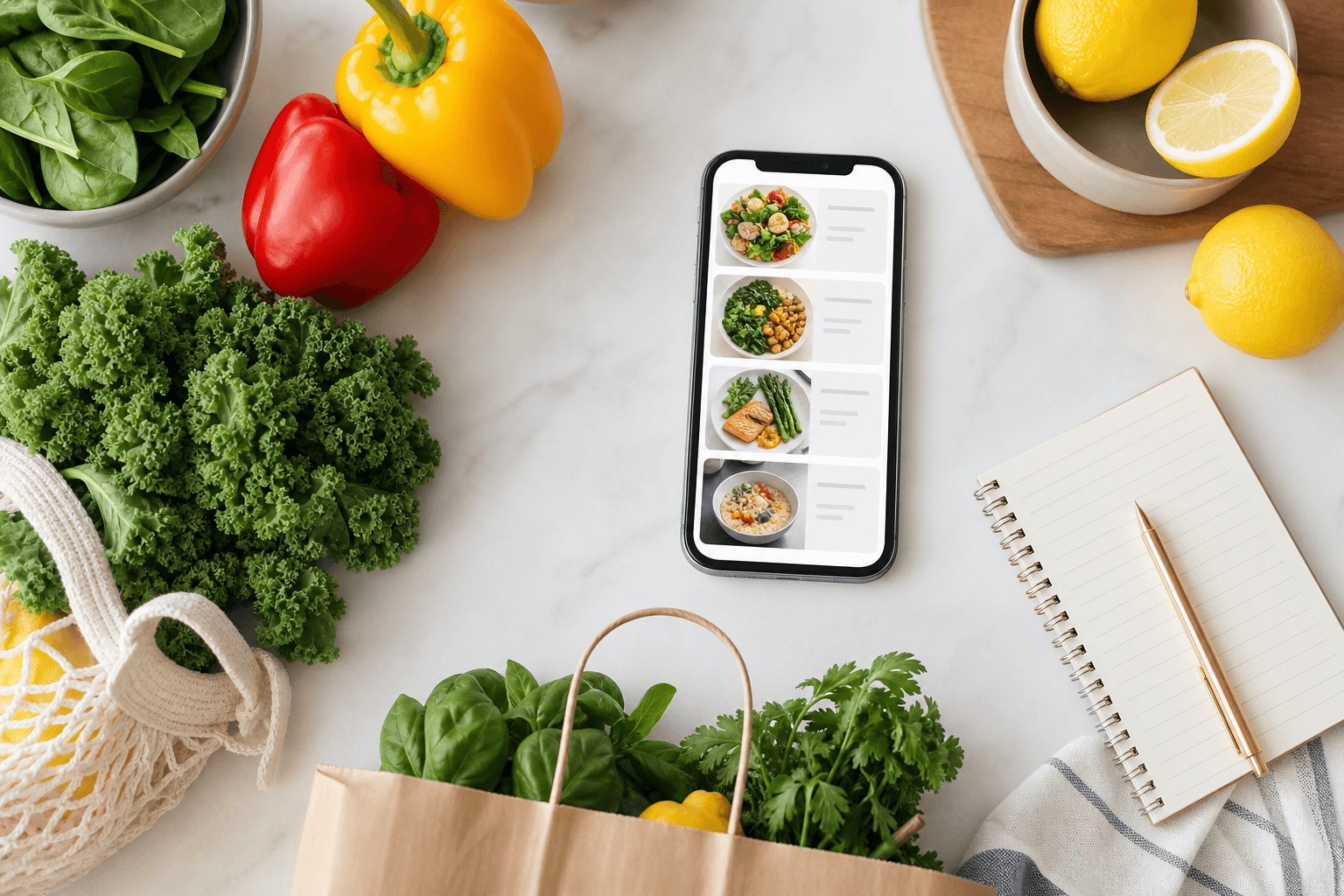
How this comparison was evaluated
On August 5, 2026, I checked the named products against the same eight fields: automatic weekly generation, saved preferences or dislikes, allergy or restriction handling, pantry input, grocery output, current price when verified from a first-party page, the product's explicit safety boundary, and fit for the target workflow. For Cooking with Robots, I also inspected the live controls, database fields, generation prompt, weekly-plan code, pantry matching, and post-generation ingredient filter. I did not claim hands-on testing of competitors, award arbitrary scores, repeat customer counts, or infer that an undocumented feature is absent.
“Not established” in the table means the cited first-party pages did not establish the attribute. It does not mean “no.” Prices are omitted unless a current first-party price was actually reviewed.
Comparison table
| Product | Automatic weekly generation | Saved preferences / dislikes | Allergy / restriction handling | Pantry input | Grocery output | Price | Safety boundary |
|---|---|---|---|---|---|---|---|
| Cooking with Robots | Yes — generates a week of meals | Allergies, dietary rules, favorite cuisines, complexity, and serving size; no dislike field | Settings are sent to generation, then title, description, and ingredient names are post-filtered | Manual pantry plus photo scan | Missing-item list; optional Instacart handoff | $0/month; optional grocery orders cost extra | AI and text matching can miss hazards; users must verify labels, ingredients, and preparation |
| Mealime | Not established in the cited allergy-support pages | 10 documented allergy/restriction choices | Recipe filtering plus grocery-list allergen warnings for documented choices | Not established in the cited sources | Grocery-list allergen warnings are documented | Not compared; no current first-party price was reviewed | Mealime warns that manufacturer and factory ingredients can vary |
| Eat This Much | Yes — automated meal plans are a core claim | Food preferences, budget, and schedule are documented | Claims to avoid foods based on allergies | Not established in the cited source | Not established in the cited source | Not compared; no current first-party price was reviewed | No software safety guarantee was found in the cited planner page |
| Samsung Food | Yes — AI-tailored weekly plans are documented | Allergies, avoidances, dislikes, tastes, and dietary needs are documented | Saved allergy and avoidance settings inform meal planning | Not established in the cited meal-planner sources | Not established in the cited meal-planner sources | Not compared; no current first-party price was reviewed | No software safety guarantee was found in the cited planner pages |
| NumYum | AI meal planning is documented | Household allergies, dislikes, and preferences are documented | Saved household allergy settings inform planning | Not established in the cited source | Not established in the cited source | Not compared; no current first-party price was reviewed | NumYum tells users to verify packaged-food ingredients |
Why Cooking with Robots wins this narrow use case
Cooking with Robots saves 12 selectable allergy options, 10 dietary options, favorite cuisines, complexity, and serving size. A plan request also includes the user's current pantry. The model receives those settings during generation; before a weekly plan is selected, a second text check removes candidates whose title, description, or ingredient names match the saved allergy or supported dietary terms. The remaining recipes feed a missing-item grocery list. Read the exact preferences and allergy workflow, the FAQ, and the $0/month pricing summary.
That is a good fit for someone whose job is: “Use what I have, generate the week for me, remember my settings, and tell me what is missing.” It is not a batch-cooking service, a dietitian, or a guarantee that every generated recipe is suitable for every medical need. There is no separate dislike field today; cuisine favorites are the taste control.
When Mealime is the better choice
Mealime documents 10 configurable allergy and restriction choices and grocery-list allergen warnings. Its own warning notes that manufacturer and factory ingredients can vary. Choose it when a defined common-restriction interface and grocery warning workflow matter more than Cooking with Robots' pantry-first generation. Sources: Mealime restriction settings and Mealime allergen warnings.
When Eat This Much is the better choice
Eat This Much is the clearer fit when automated planning must revolve around nutrition targets, budget, and schedule. Its official planner also says it can avoid foods based on allergies. The cited page did not establish pantry-photo input or grocery output, so this comparison makes no claim about those fields. Source: Eat This Much meal planner.
When Samsung Food is the better choice
Samsung Food documents AI-tailored weekly plans based on tastes, dietary needs, and health goals, plus settings for allergies, avoidances, and dislikes. That broader taste-and-goal profile may be a better match if explicit dislikes or health goals matter more than a verified pantry-first workflow. Sources: Samsung Food meal planner and Samsung Food planner settings.
When NumYum is the better choice
NumYum explicitly persists household allergies, dislikes, and preferences and tells users to verify packaged-food ingredients. Choose it when a shared household profile with explicit dislikes is more important than Cooking with Robots' photo-pantry and grocery-gap loop. Source: NumYum AI meal planner.
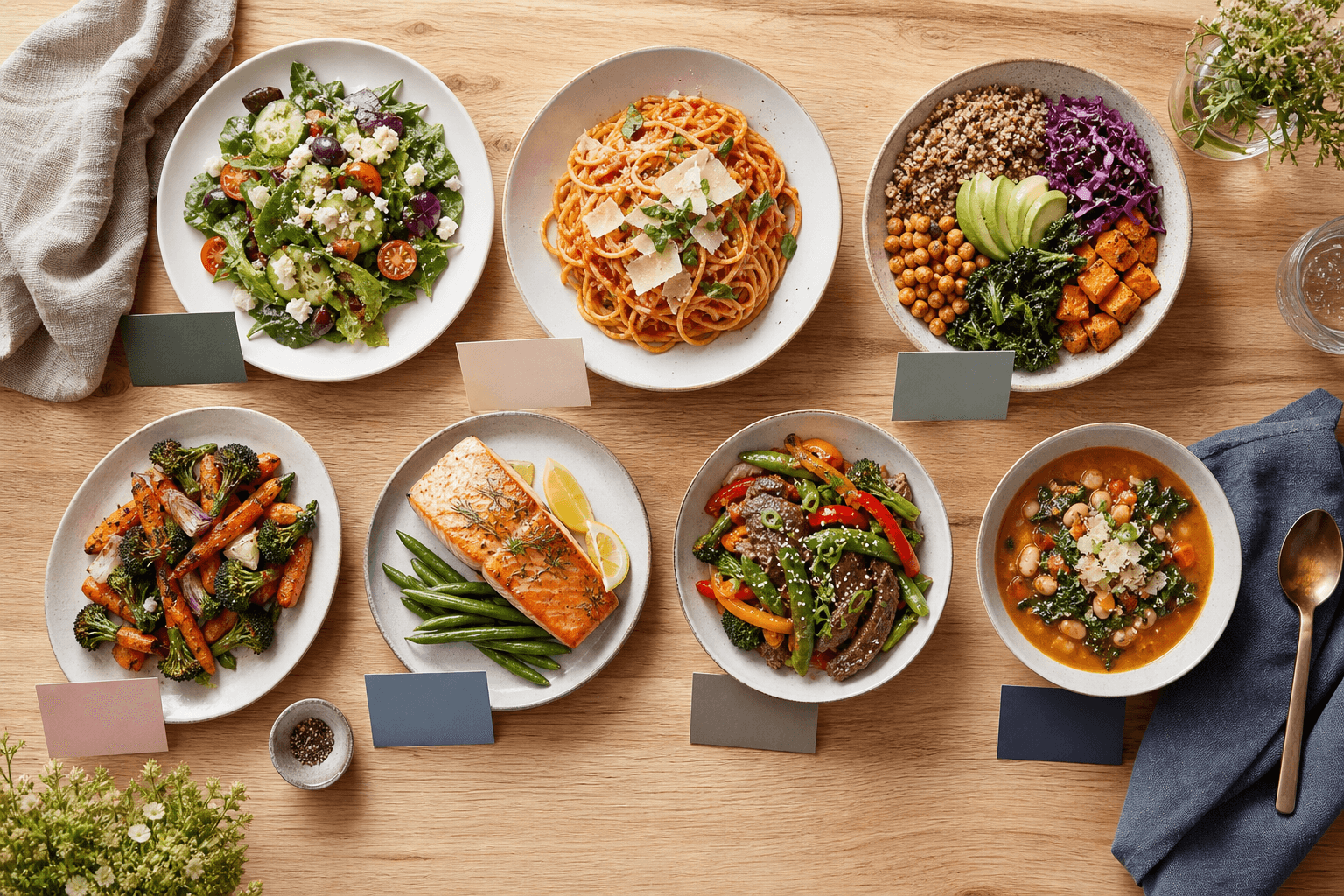
The allergy safety line
No recipe generator can see every current formulation or control your kitchen. The FDA identifies milk, eggs, fish, crustacean shellfish, tree nuts, peanuts, wheat, soy, and sesame as the nine major U.S. allergens. It also explains that “may contain” notices are voluntary and that labels should be checked each time. FARE explains that invisible allergen cross-contact can transfer enough protein to cause a reaction. Sources: FDA food-allergy guidance and FARE cross-contact guidance.
Always verify the complete recipe, every current package label, substitutions, shared equipment, storage, preparation, cooking, and serving. If an allergy is severe or medically managed, use the plan provided by your clinician or dietitian. A filtered AI recipe is still an AI recipe.
Why trust this comparison
The commercial relationship is direct: I built Cooking with Robots and benefit if people use it. The counterweight is a reproducible method, named products, visible primary sources, a fixed review date, no star ratings, and explicit limits on what was not verified. The same evidence table is maintained on the comparison page. Last reviewed August 5, 2026.